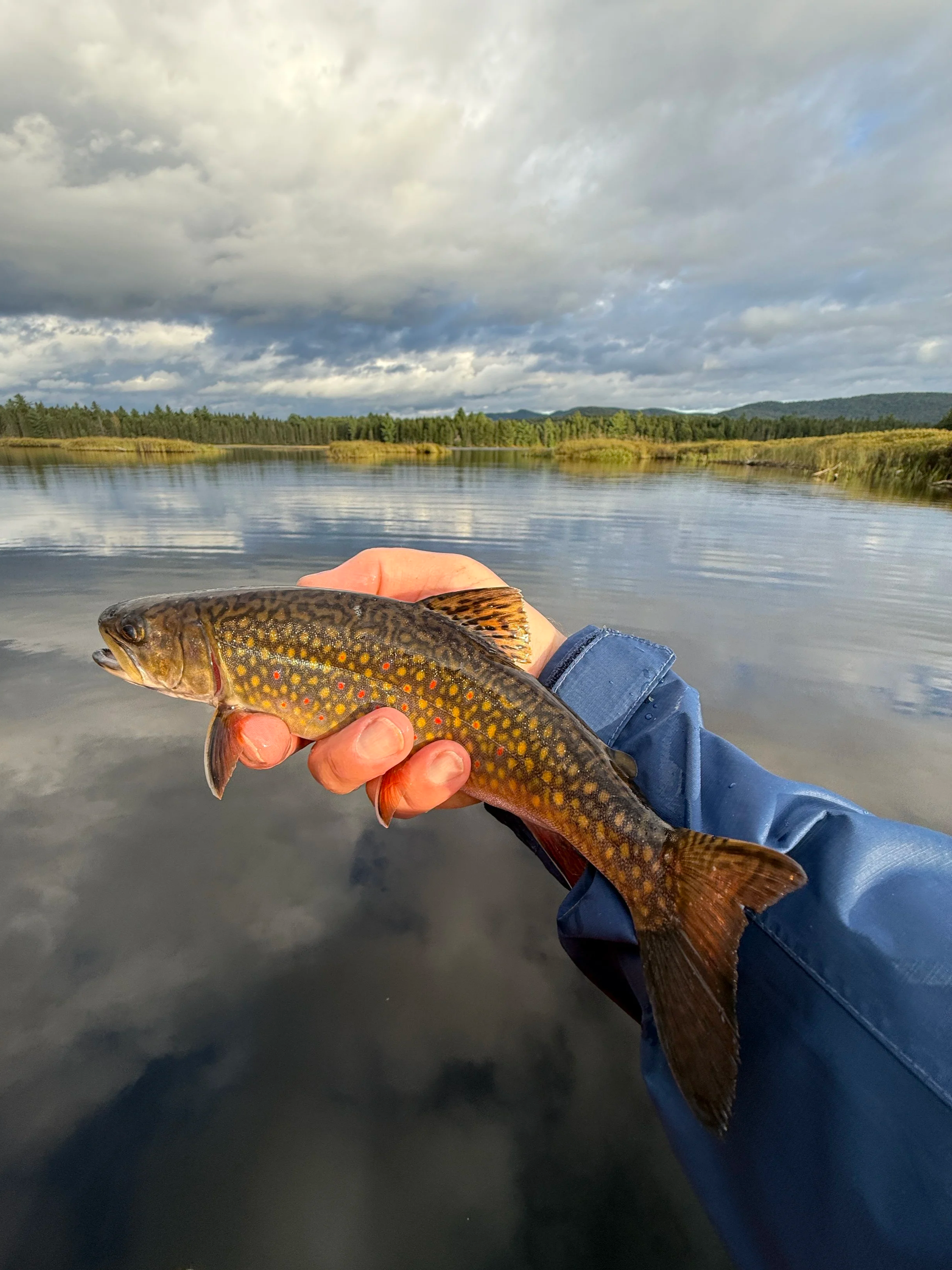

BROOK TROUT (Salvelinus fontinalis)
Conservation ● Restoration ● Recreation
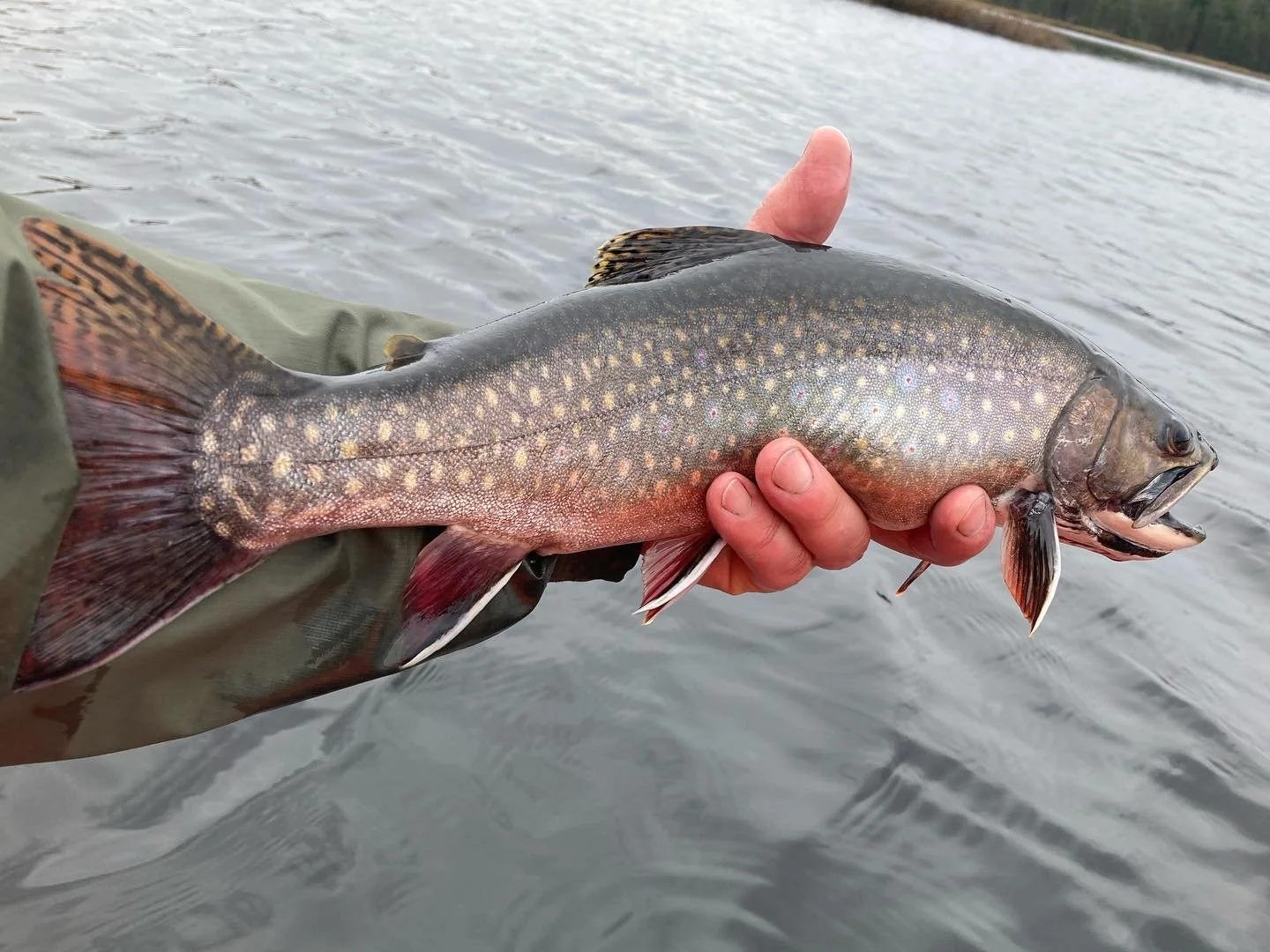
Brook Trout Bred for the Wild
A resilient hybrid developed through decades of research to support healthy Adirondack fisheries.
Our hybrid strain brook trout combines the strengths of a wild strain from the Temiscamie River in Quebec, Canada, with the New York State Domestic strain. Developed through 25 years of research by Cornell University, this unique fish was bred to thrive in the wild, offering strong growth and high survival rates. Today, it continues to play an important role in supporting Adirondack coldwater fisheries management.
Temiscamie x Domestic Hybrid Strain Brook Trout Pricing
Fall fingerlings (3.0” to 4.0” length) are $1.05/fish for orders of 499 fish or less, $1.00/fish for orders of 500 fish or more. Under ideal conditions, the average size can be expected to be between 7.0” and 9.0” by fall of the following year.
Spring yearlings (7.0” to 9.0” length) are $3.25/fish. Rearing space in our hatchery is limited, so the availability of these fish is usually limited as well.
Specialty Salmonid Stock
Limited availability, small-batch cohorts. Current inventory is subject to prior sale and may already be fully committed.
Little Tupper Strain brook trout
Adirondack Heritage Strains are genetically distinct strains of brook trout that evolved in isolation over the last 20,000 years within specific bodies of water in the Adirondacks. Typically, the strain is named for the lake in which the strain was first identified. We have maintained a population of Little Tupper strain brook trout since 1991. Broodstock for this strain reside in a natural pond on our property in order to reduce the effects of domestication.
Fall fingerlings (3.0” to 4.0” length) are $1.05/fish for orders of 499 fish or less, $1.00/fish for orders of 500 fish or more. Under ideal conditions, the average size can be expected to be between 7.0” and 9.0” by fall of the following year.
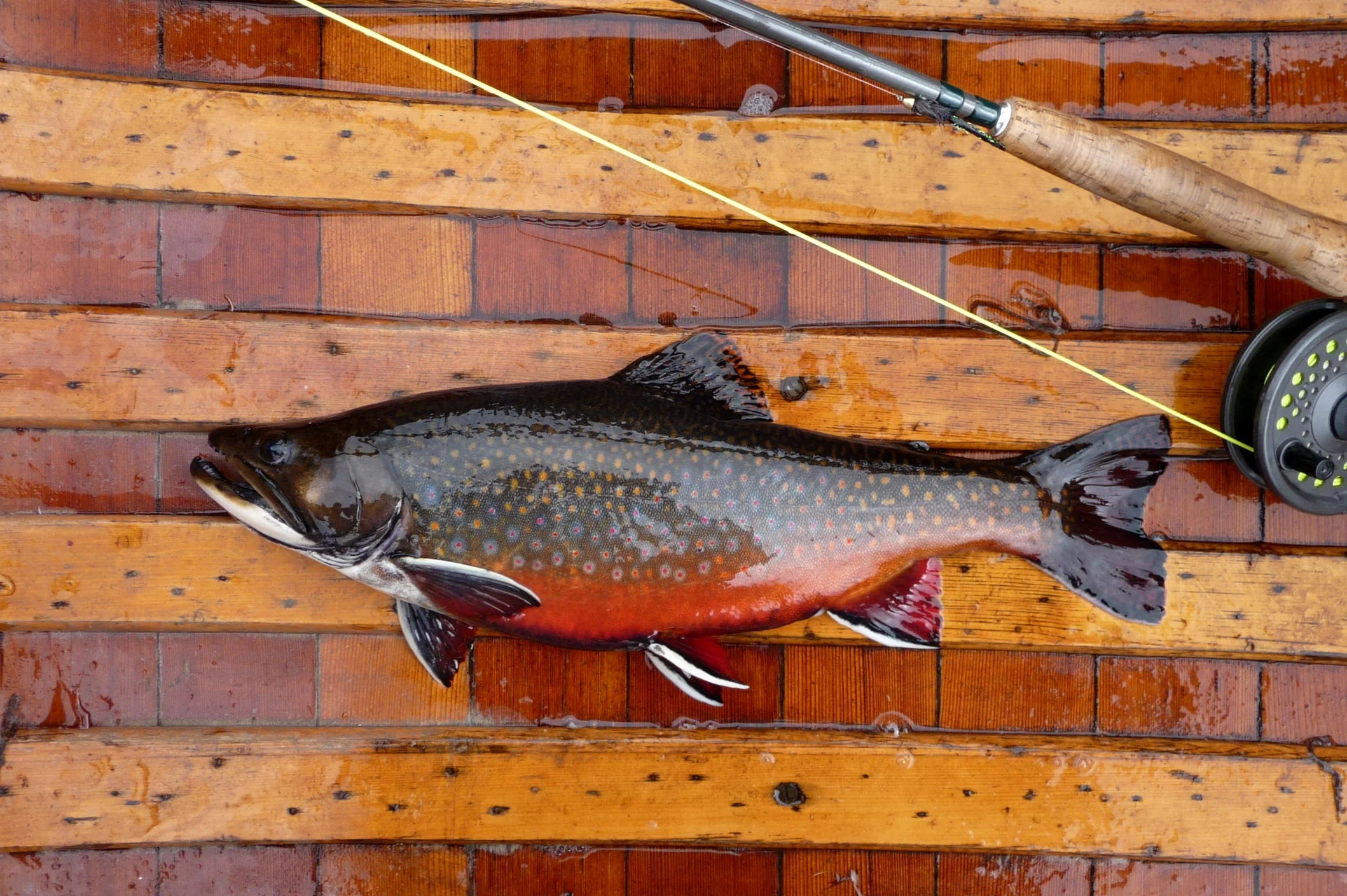
Domestic Strain brook trout
This strain comprises one half of the Temiscamie x Domestic hybrid strain bred at the New Brandon Hatchery. We raise the Domestic strain primarily to be used as broodstock, but typically have an excess of one-year old fish. While New Brandon does not recommend the use of these fish in long-term conservation or restoration projects, they do make excellent fish for stocking in small ponds for recreational put-and-take angling.
Spring yearlings (4.0” to 6.0” length) are $2.00/fish. Numbers are limited and are reserved on a first-come, first-serve basis.
Landlocked Atlantic Salmon
Grown from eggs sourced from the State of Maine’s Grand Lake Stream Hatchery, these fish require large, deep, cold and well oxygenated lakes. These fish will not thrive in a small pond environment.
Fall fingerlings (2.5” to 3.0” length) are $1.50/fish.
Spring yearlings (average 7.5” length) are $4.00/fish.
Fish deliveries are set at $2.00/mile, one-way, from our hatchery to the stocking location. Given variation in gas prices, we may occasionally add a fuel surcharge (up to 10% of delivery cost) to this rate.
How do I get my fish?
Our hatchery is inspected annually to ensure that our fish are certified disease free. A fish health inspection report will be provided to you with your purchase. Our Certificate of Health allows for sales within New York State.
Are your fish certified disease free?
If you are stocking fish in New York State, the acquisition of a stocking permit from the New York State Department of Environmental Conservation is required and is the responsibility of the landowner.
Further information about stocking permits is available at: http://www.dec.ny.gov/permits/25026.html.
Do I need a stocking permit?
Brook trout will only inhabit areas of cold, clean, and well oxygenated water. They are intolerant of polluted or otherwise degraded habitat. They prefer water temperatures below 70 degrees Fahrenheit and dissolved oxygen levels of 5.0 ppm or greater.
Brook trout can have difficulty coexisting with other fish, and may lose out to competition and predation pressure from species like yellow perch and largemouth bass. However, every pond is unique and the situations within them are variable. As such, results my vary as well.
Will brook trout live in my pond?
There is no real easy answer to this question. In the waters that New Brandon manages, we have seen successful angling returns and netting survey results with stocking rates ranging between 10 to 60 fish per surface acre. The NYS DEC recommends 400 to 600 fish per surface acre when stocking small farm ponds: http://www.dec.ny.gov/outdoor/7975.html.
The reality is every pond is different and stocking rates will vary depending on the conditions within your pond. Morphological characteristics (size, average depth, maximum depth), biological influences (water chemistry, presence of other fish species, availability of food), and physical impacts (angling pressure, removal rates) will all have an influence on overall stocking totals.
How many fish should I stock?
Location
29 Brandon Road
Paul Smiths, NY 12970
Phone
(518) 327-3534
Contact Us
Please do not hesitate to contact us if you have any questions. If you would like to request fish, let us know and we will put you on our stocking list. Due to the variable nature incumbent in raising and selling live fish, our inventory is not guaranteed from one year to the next. As such, we operate on a first come, first serve basis. While we will do everything in our power to meet your order, your inclusion on the stocking list does not necessarily guarantee that we will have fish to sell you when the time comes. Thank you for your interest in New Brandon Fisheries and we look forward to hearing from you.